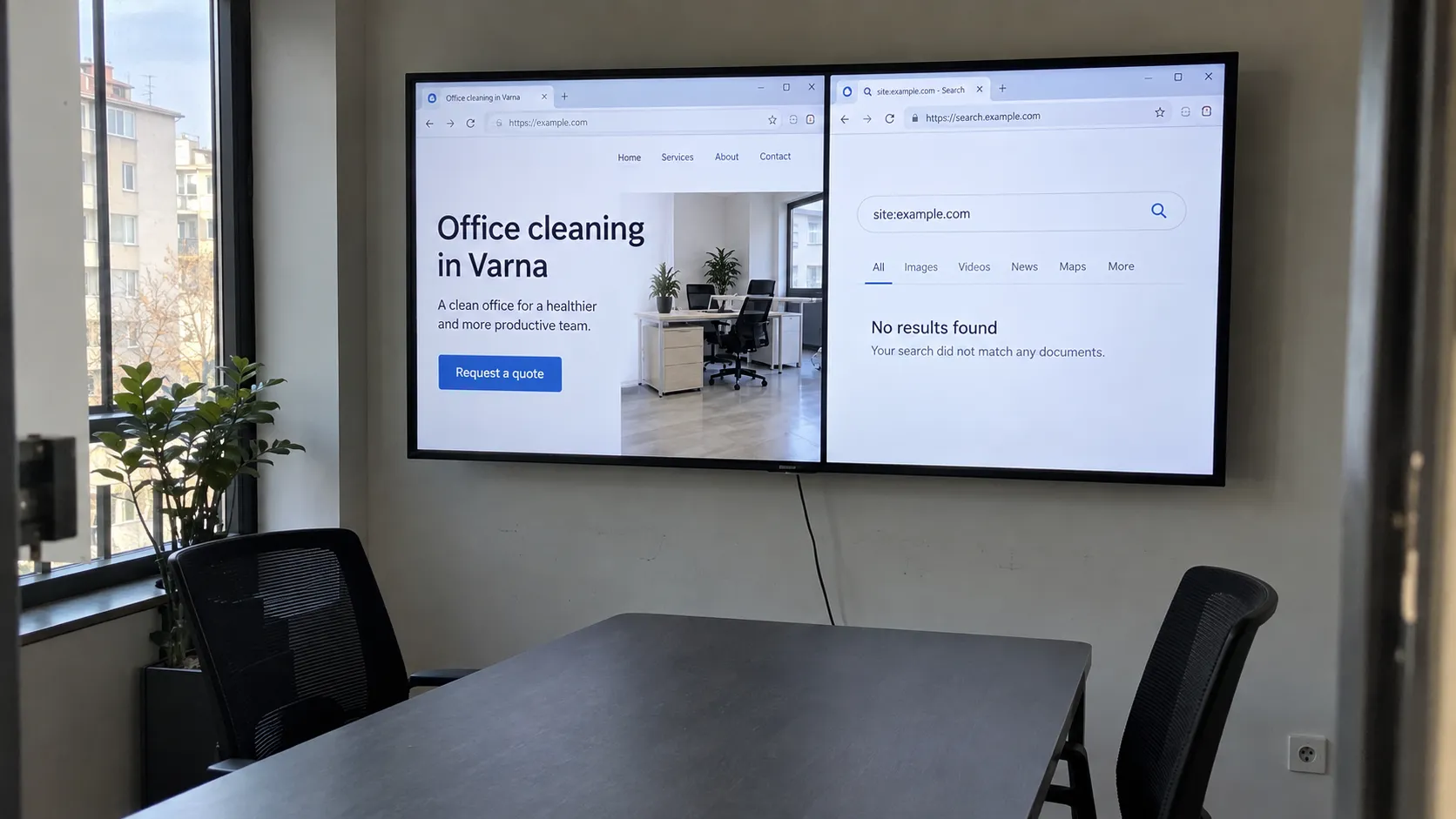
You search for your business name and get a directory listing, your Facebook page and a competitor with a similar name. Your own site sits on page three, or nowhere. Some of the people who search that way were looking for you, and they call whoever shows up.
A website not showing up on Google can have thousands of causes, and the ones we run into most often come down to two problems. Either Google never added the site to its index, or it added it and ranks it below page one.
Fixing the first can take anything from an hour of a developer's time to a few days of rewriting. The second takes months of work on the pages, and we see it more often. Which one you have decides the answer to "how do I get my website on Google?", and one search tells you.
Contents
- Why Is My Website Not Showing Up on Google?
- New Website Not Showing Up on Google? Google Hasn't Found It Yet
- Something on the Site Tells Google to Stay Out
- Google Read the Pages and Left Them Out
- Your Site Is on Google but Buried Below Page One
- Google Can't Tell What the Page Sells
- Each Page Needs One Search, and the Right One
- No Other Site Vouches for Yours
- Speed Is the Tie-Breaker
- How Much Does It Cost to Get My Website on Google?
- Questions Owners Ask About Showing Up on Google
Why Is My Website Not Showing Up on Google?
Going live puts a site on the internet, and Google still has three jobs to do before it shows up in a search. It finds the site by following links from sites it already knows. It files each page in its index, the list of pages it's willing to show. Then it decides where each page ranks for each search.
A site can stall at any of the three, and a site: search shows whether Google has filed it at all. You type site:yourdomain.com into Google, and it lists the pages Google has filed.
An empty result means Google hasn't found the site yet, or found it and didn't file it. A list of your pages means Google has them and ranks them low.
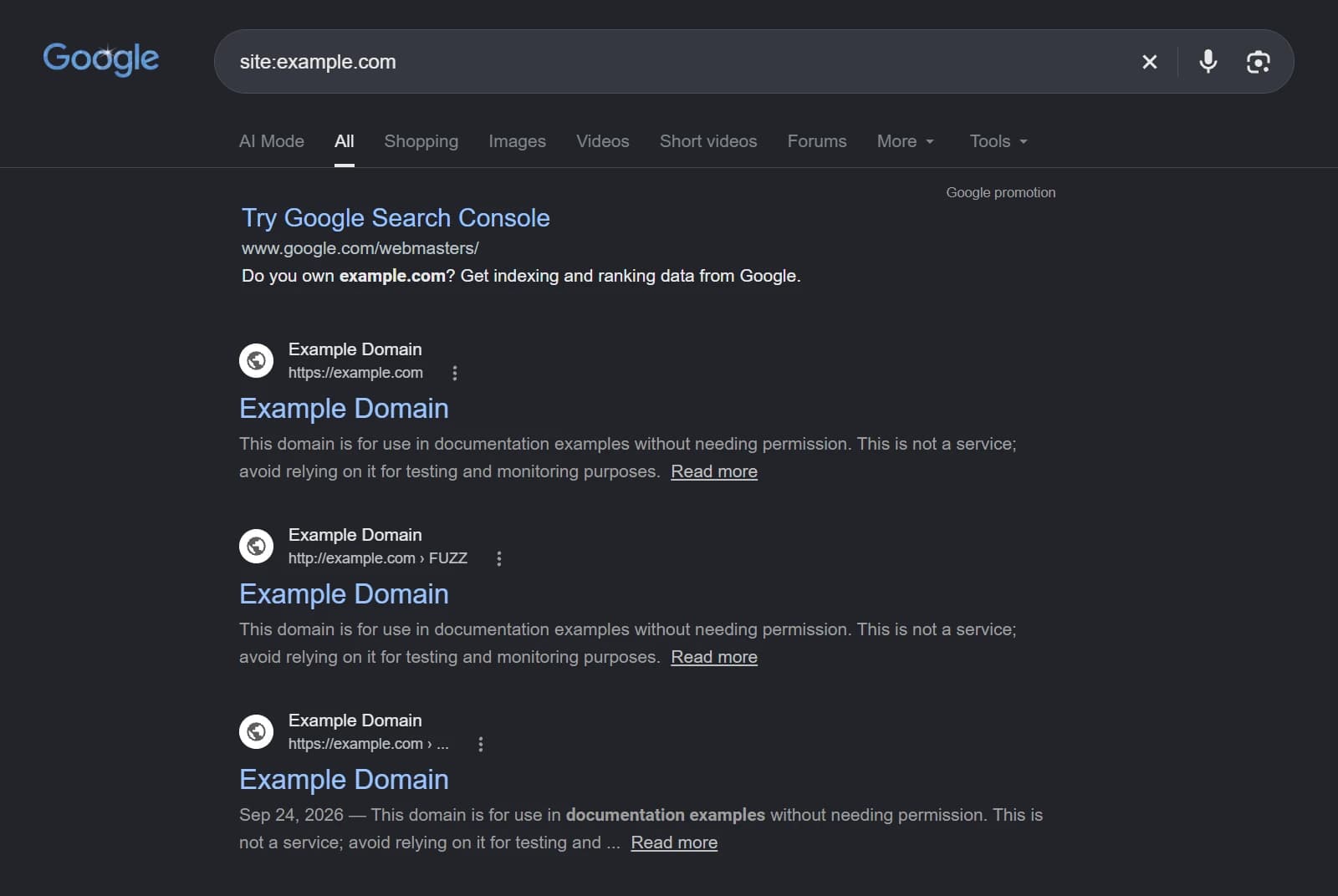
New Website Not Showing Up on Google? Google Hasn't Found It Yet
If you launched the site last week and can't see it on Google yet, it's because almost no links point to it, and links are how Google finds new sites. Google says crawling "can take anywhere from a few days to a few weeks", and asking again won't make it faster.
A sitemap shortens the wait. It's a file listing every page, and Google recommends one for exactly this case: a new site with few links.
The sitemap reaches Google through Search Console, Google's free dashboard for site owners, which then reports which pages made it in. Setting up both is a short job for a developer, and we do it before every launch.
Until Google catches up, customers can still reach the site directly. A link on your Facebook page or in your Instagram profile takes them straight there.
Something on the Site Tells Google to Stay Out
If the site: search still finds nothing a month after you launched the site, check the site itself. Something in it may be telling Google not to file it.
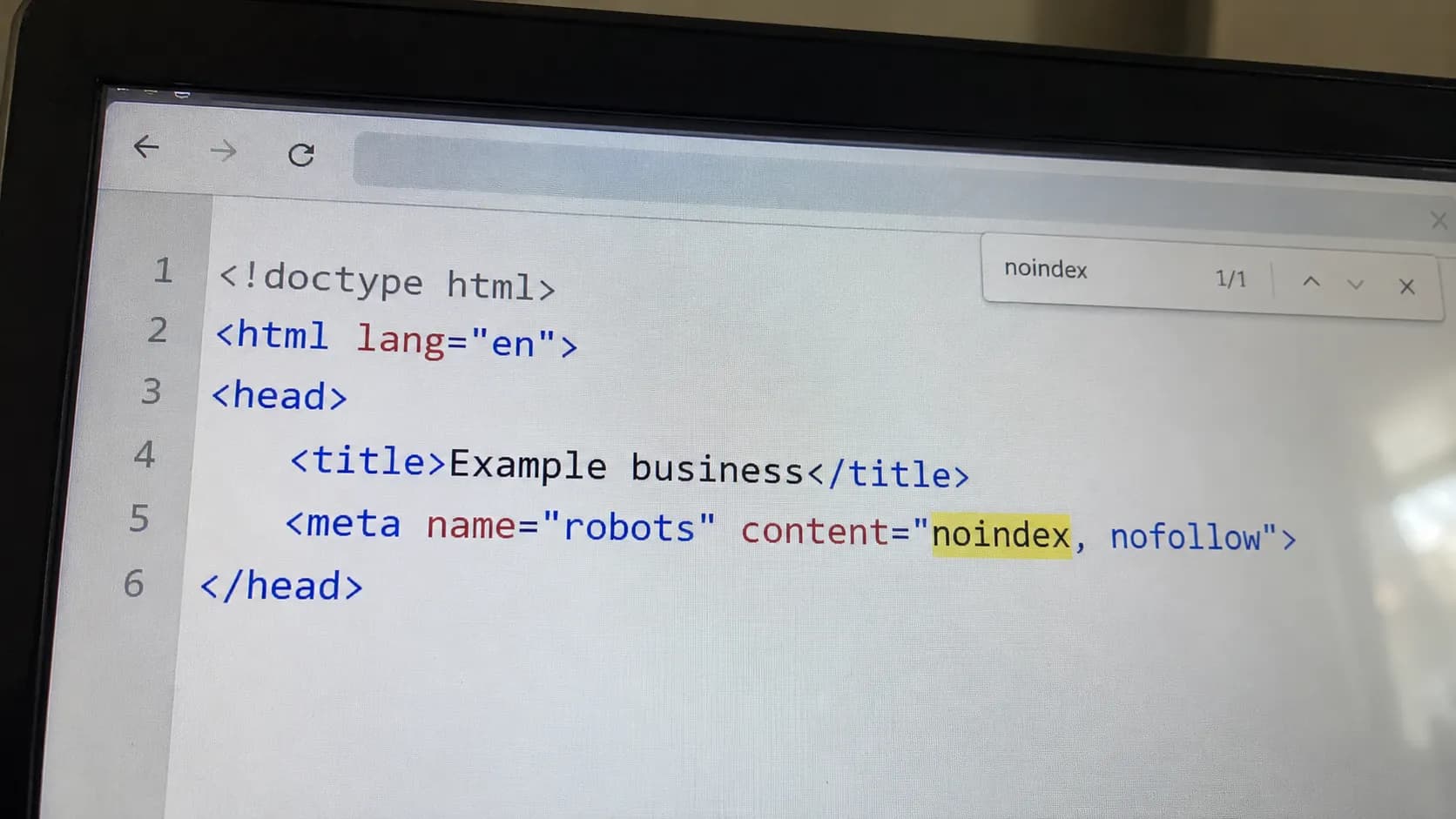
The block we find most often is left over from the build: a noindex tag, a line in the code that tells search engines not to file the page. Developers use it to hide an unfinished site, and we hide ours the same way.
If the tag stays on after you launch the site, Google keeps leaving it out. That's why removing the tag is one of the last items on our launch list.
Two other blocks keep Google out in their own way. A robots.txt file, a small file that tells search engines which parts of a site they may visit, can stop Google reading any page at all. A server that keeps returning errors gets its pages dropped from the index over time.
None of the three shows on the site itself. Search Console is where they surface, with the reason Google left out each page. Once a developer has that reason, the fix is usually an hour or two.
Google Read the Pages and Left Them Out
Sometimes Google visits the pages and still leaves them out. Search Console marks them "Crawled - currently not indexed". Crawled means Google's software read the page, and not indexed means it decided against filing it.
Google doesn't say why. In the sites we look at, the pages left out add nothing Google doesn't already have, in one of three ways:
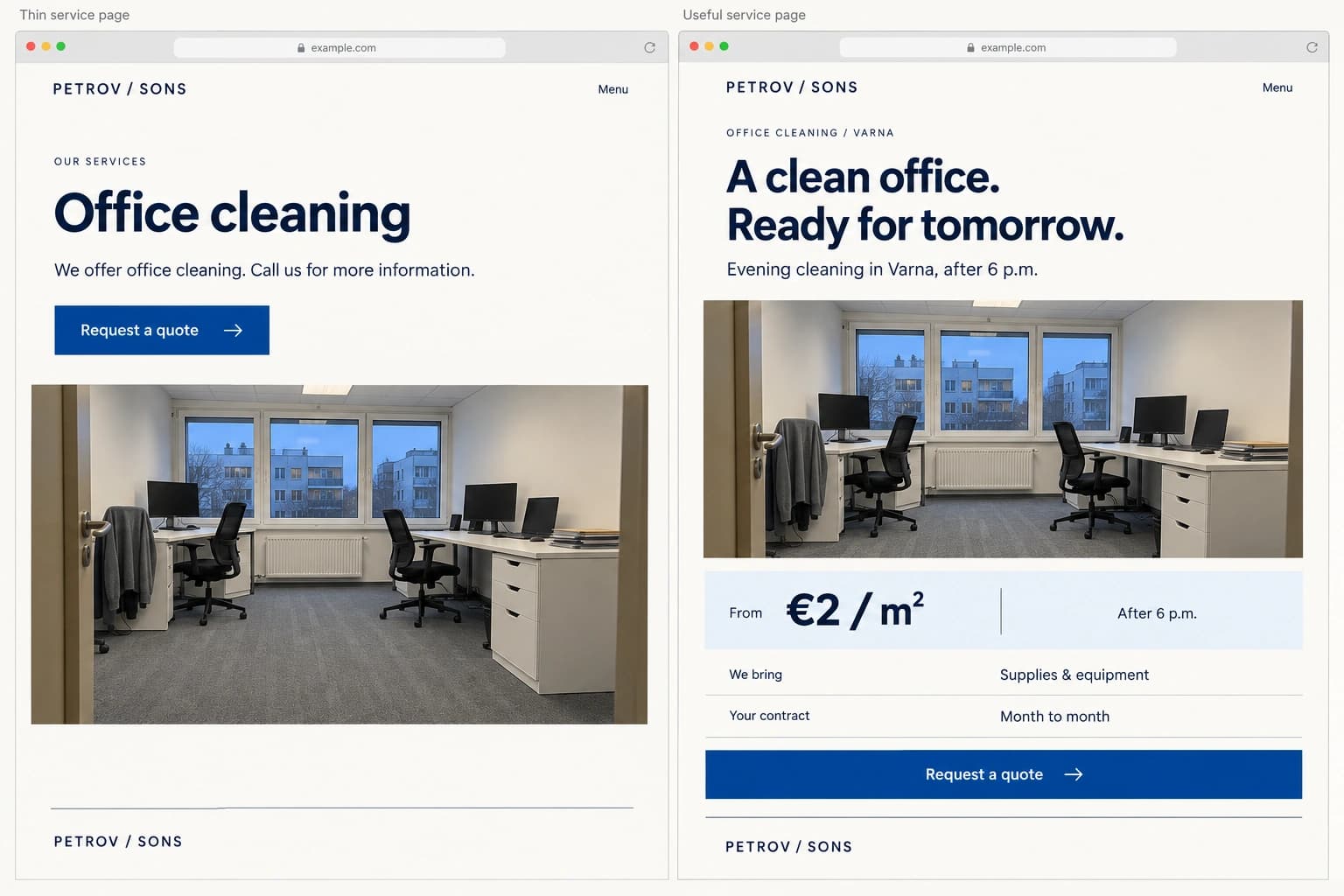
- Thin pages. Two lines and a phone number give Google nothing to match to a search.
- Copied pages. A description copied from a supplier already exists on the supplier's site, and a second copy gives Google nothing new.
- Mass-produced pages. Dozens of near-identical pages made by a tool to catch searches count as scaled content abuse under Google's spam policies, whoever or whatever wrote them.
Often they're the service pages, the ones meant to bring in work. While they're left out, a search for that service can't find you at all.
What gets them filed is a page written for the buyer. Two versions of a cleaning company's office page:
- Before: "We offer office cleaning. Call us for more information."
- After: "Office cleaning in Varna after 6 p.m., from 2 € per square meter. We bring the supplies and the equipment, and the contract runs month to month."
The second answers what a buyer asks before calling, and those answers give Google something to match. The page needs your knowledge of the trade and a copywriter's knowledge of how buyers search for it. On a small site, that's a few days of copywriting and design.
Your Site Is on Google but Buried Below Page One
If the site: search finds your pages, Google has filed them, and the question is where it ranks them. Google weighs many things, but on almost every buried site we look at, two decide it: whether it's clear what the page is for, and whether other sites link to it. We start with the page, because links don't help if Google can't tell what the page offers.
This is where we spend most of our hours, because it's where the calls are. A page that ranks for "office cleaning Varna" gets calls from people who've already decided to hire a cleaner, and no ad budget pays for them.
Google Can't Tell What the Page Sells
Google uses a page's title, the line that usually becomes the headline in search results, and its main heading to understand what the page is about. A homepage titled "Home" with the heading "Welcome to our company" tells Google nothing about the trade or the town.
- Before: title "Home", heading "Welcome to Petrov & Sons"
- After: title "Office Cleaning in Varna | Petrov & Sons", heading "Office cleaning in Varna, after hours"
Rewriting titles and headings takes minutes per page, once someone knows which words to use.
It's also why some sites can't be found under their own name. A generic name like "Best Cleaning", or one shared with an older business, loses to the older pages until the title pairs it with the trade and the town.
Each Page Needs One Search, and the Right One
Knowing which words to use is the harder part, and it goes wrong in two ways.
The first is one page covering everything. A single "Services" page listing office cleaning, window washing and carpet care competes for three searches at once, and Google prefers a page that covers one topic in depth.
Each service needs its own page instead. Repeating the service names in every sentence of one page doesn't do the same job, and Google's spam policies call that keyword stuffing. In an online store, each category page needs a few lines of its own, and we plan them into every online store we build.
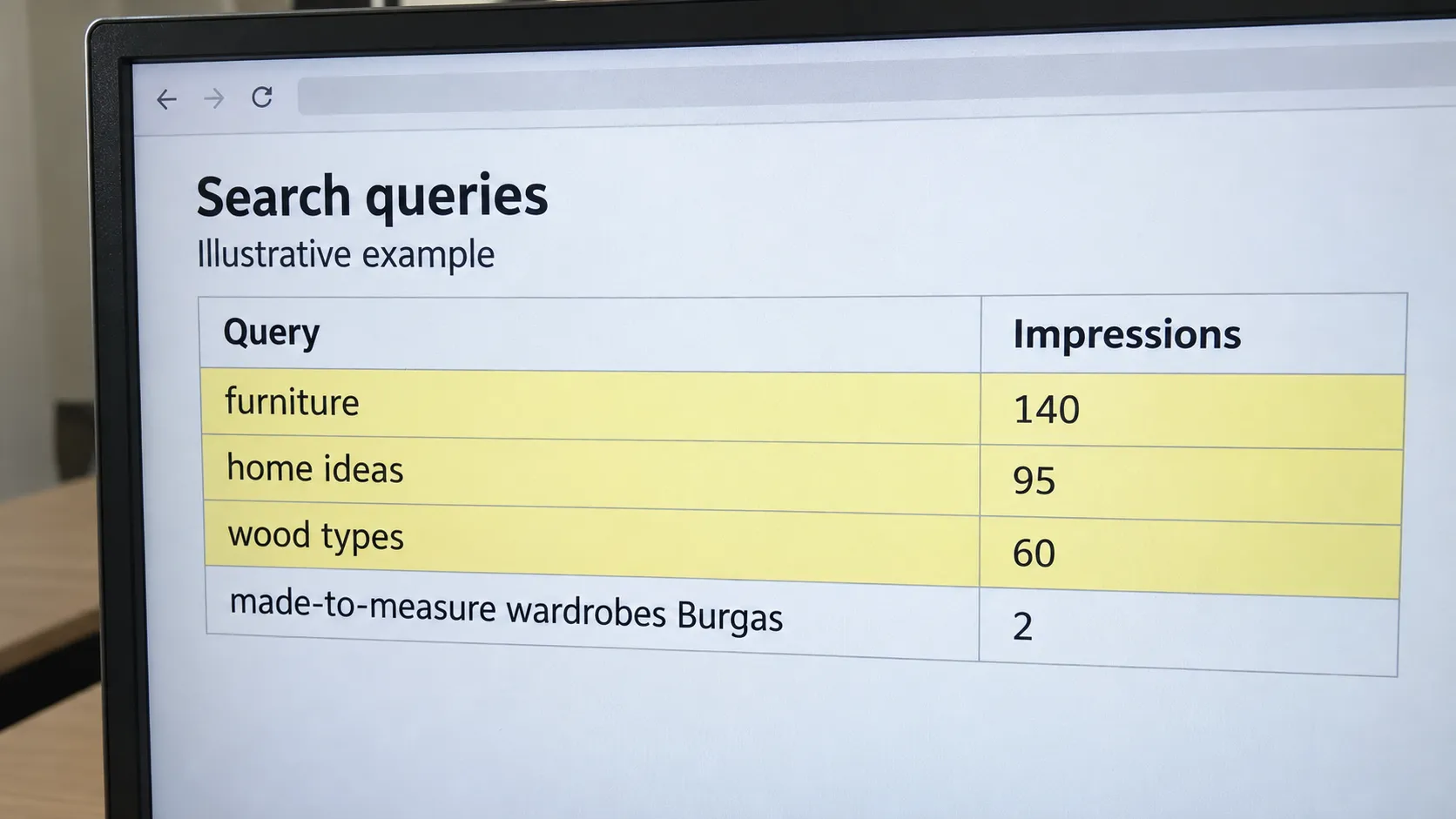
The second is aiming at the wrong search. A carpenter in Burgas who ranks for "furniture" gets students, decorators and people browsing for ideas. "Made-to-measure wardrobes Burgas" is typed far less often, by someone who wants a wardrobe built. We call the first kind vanity keywords.
Search Console shows them: the searches that bring visitors are broad words that never name the service. A page written for the wrong search can rank well and still bring no calls.
Planning the pages means listing the searches buyers type and giving each one a page, and on an existing site that plan goes into the quote before any page is rewritten. Every SEO web design project we take on starts there.
No Other Site Vouches for Yours
A page Google understands can still lose to an older one, because Google takes links from other sites as a sign of trust and looks at whether "other prominent websites link or refer to the content". A business directory with thousands of sites linking to it starts with a big lead over a young site with a handful.
Search Console's Links report shows how many sites point to yours, and for a young site it's a few or none.
The links that help a small business come from places that already know it: suppliers, a trade association, partners, the local chamber of commerce. Earning them means asking, one partner at a time, over months. Buying them breaks Google's spam policies and can sink the site they point to.
Speed Is the Tie-Breaker
We build fast sites, and it would suit us to tell you speed lifts you on Google. Google says it "always seeks to show the most relevant content, even if the page experience is sub-par", and speed counts in ranking mainly when several pages answer a search equally well.
Google won't lift you for speed, but every tenth of a second decides how many of the people who already found you reach your form. In a Deloitte study commissioned by Google, lead-generation sites that got 0.1 seconds faster on every page saw 21.6% more visitors reach the form.
You can check how fast your page is for free with Google PageSpeed. It scores the page from 0 to 100: below 50 is poor, 50 to 89 needs improvement, and 90 or above is good. Look at the mobile score. If heavy photos are the cause, resizing them takes a few hours, and a slow template only gets fixed with a new site.
Every site we build scores 90 or above on a mid-range phone over mobile data. If the score is under 90 when we launch it, we keep working at our own cost. You can run the test on this site too.
How Much Does It Cost to Get My Website on Google?
With several of these at once, the order matters, because each fix only pays once the one before it is done.
Blocks come first, because nothing else helps while Google can't file the site. Our care plans start at 49 € a month and include hours for edits like these.
Pages come next. A rewrite on the current site gets its own written quote, with the page plan in it. When the old template can't take more pages, the job becomes a website redesign, priced like a new site from 1,500 € for up to six pages. Every package is on our pricing page.
Links and rankings come last and take longest. We expect the first movement within 60 to 90 days and the bigger gains after three to six months. No one can guarantee the top spot on Google, and we don't. Meanwhile, the pages above a buried site keep collecting links.
For that stretch, our Standard plan at 129 € a month adds a report on rankings and speed. Ranking pays once a visitor from search picks up the phone. A site with traffic but no leads has that second problem to solve.
Questions Owners Ask About Showing Up on Google
Rarely, and a penalty is the easier case, because Google tells you about it in Search Console and names the reason. When there's nothing there, the cause is in the site itself. We look at three things, in this order: whether something in the code is stopping Google, whether the pages say clearly what you sell, and whether other sites link to yours. The order matters, because each fix only helps once the one before it is done.
The first thing we check is whether the new site changed the page addresses and left the old ones leading nowhere. Google recommends permanent redirects from every old address to its new page, kept for at least a year.
Not from Google. It "doesn't accept payment to crawl a site more frequently, or rank it higher". You can pay for Google Ads, and your site shows above or below the regular results with a sponsored label for as long as you pay for the clicks.
What you can pay for is fixing whatever keeps the site off Google, and that's the faster route. If it's a tag left in the code, we remove it in minutes, and Google starts filing the pages within days to weeks. If it's a page Google can't work out, we rewrite it around the words your customers type into Google, and it keeps bringing visits with no ad budget behind it.